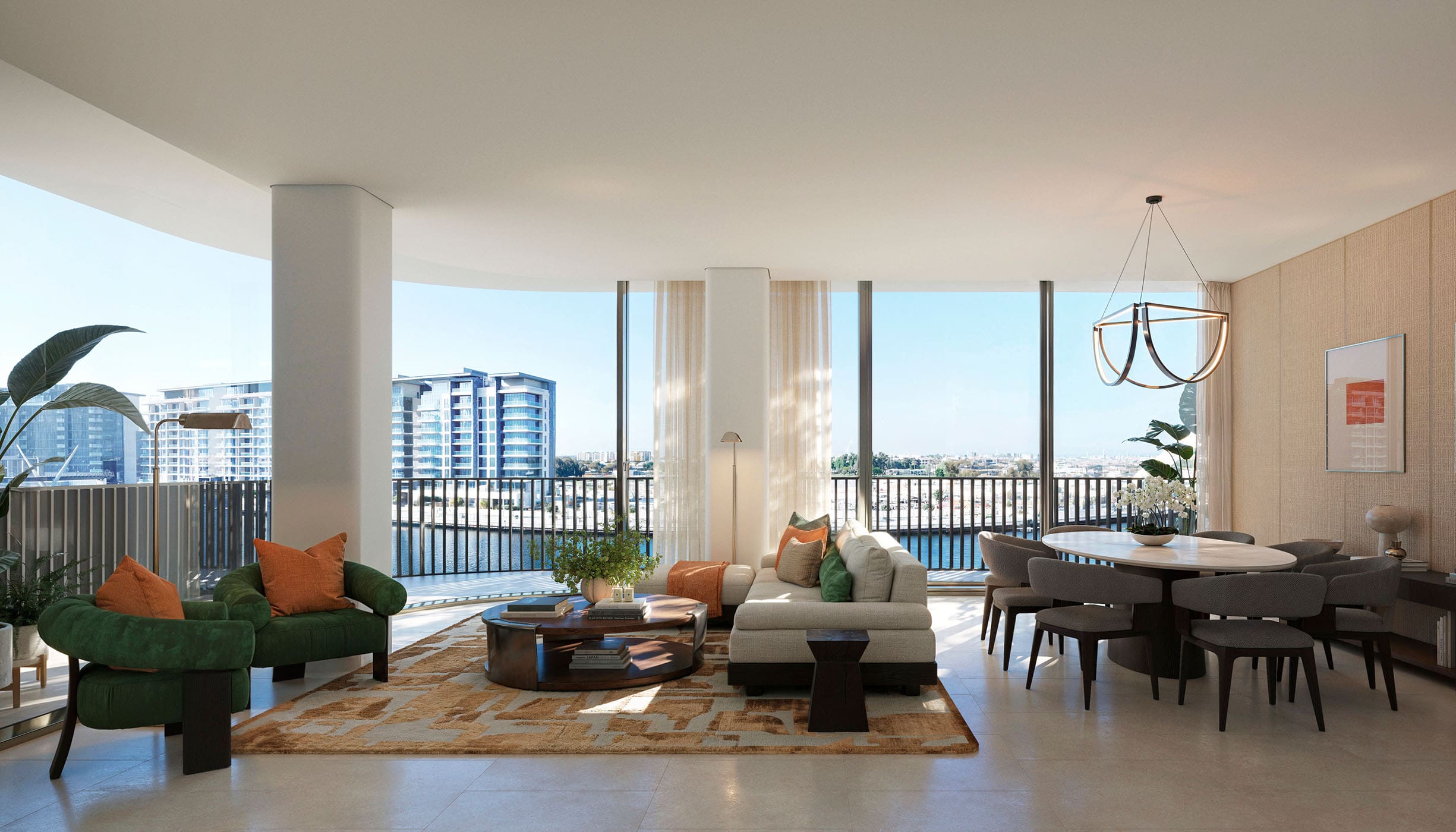
Eden House The Park interiors: walnut, travertine and biophilic light
In Dubai, residential luxury has long converged on a fixed grammar: polished marble, gilding, dramatic ceiling heights, sea or skyline views. Eden House The Park takes the opposite stance. The Al Wasl development does not chase stagecraft. It pursues quality of habitation, closer to contemporary European residences than to hotel suites.
A material palette that breaks Dubai codes
The interior language rests on three dominant materials: smoked walnut, light travertine and patinated bronze. Walnut clads full-height doors, headboards, kitchen joinery and selected wall panels. Its regular grain and deep tone bring a warmth that pale oak, ubiquitous in Dubai for the past decade, does not deliver.
Travertine appears in large-format slabs with recessed joints across living-area floors, kitchen countertops and bathroom basins. Its naturally textured porosity catches light differently from classic Calacatta marble. Patinated bronze is used sparingly: ironmongery, taps, sliding-door tracks. It punctuates rather than dominates.
Proportions: ceiling height over square footage
Eden House The Park favours generous ceiling heights (around 3 metres in the main rooms) rather than oversized floor plates. That is an architect''s decision and it changes everything. A 30 m² room with 3-metre ceilings reads as a noble volume. The same area with a standard ceiling reads as an elongated hotel bedroom.
Openings follow the same logic: full-height glazing framing deep terraces, cross-through windows that enable natural ventilation, and timber screens that filter Dubai''s harsh light without resorting to systematic motorised blinds.
Biophilic light as guiding principle
The biophilic label covers a concrete reality: natural light is treated as a building material. Planted atria diffuse indirect light into circulation areas, internal courtyards bring greenery into the heart of each building, and brushed-plaster ceilings return a soft light that contrasts with the reflective surfaces typical of the city.
On the electrical side, lighting follows a circadian scheme: warm colour temperatures in the morning and evening, more neutral around midday, on programmable scenes. Integrated luminaires disappear into the cornicework rather than hanging from the ceiling.
Kitchens and bathrooms: the gap from the Dubai standard
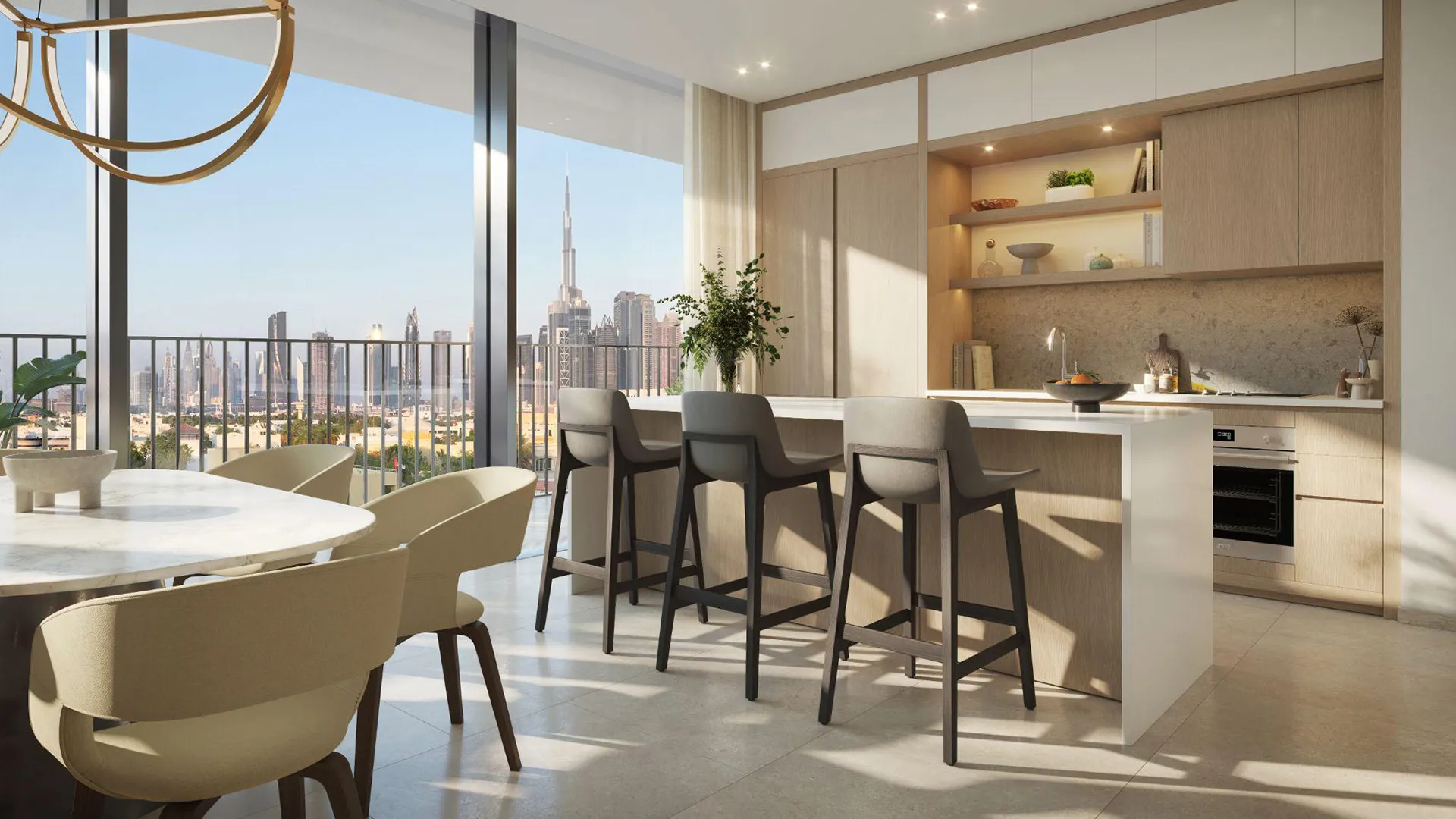
Kitchens are designed as proper rooms, not as kitchenettes plugged into the living area. Appliances are built in behind walnut fronts, the central island carries a solid travertine top, and a technical pantry separates the visible kitchen from the back-of-house. Taps are in brushed bronze, supplied by specialist Italian makers.
Bathrooms abandon the aligned double vanity for more residential configurations: sculptural travertine basin, walk-in shower treated as a separate room, free-standing bathtub presented as furniture. The detail matters: leather handles, recessed back-lit mirrors, heated travertine floors.
Why this changes use value
The whole produces a rare effect in Dubai: a residence that lives like a home, not a suite. For an end-user buyer, that is the difference between an investment that gets rented and a place that gets inhabited. Material detail, proportions and light build that bridge. For the full project context, visit eden-house-the-park.ae.
Contact us to visit the show apartment
The show apartment lets you touch the materials, gauge the proportions and judge the light under real conditions. To arrange a viewing or receive the interior book, reach out via the contact form.